
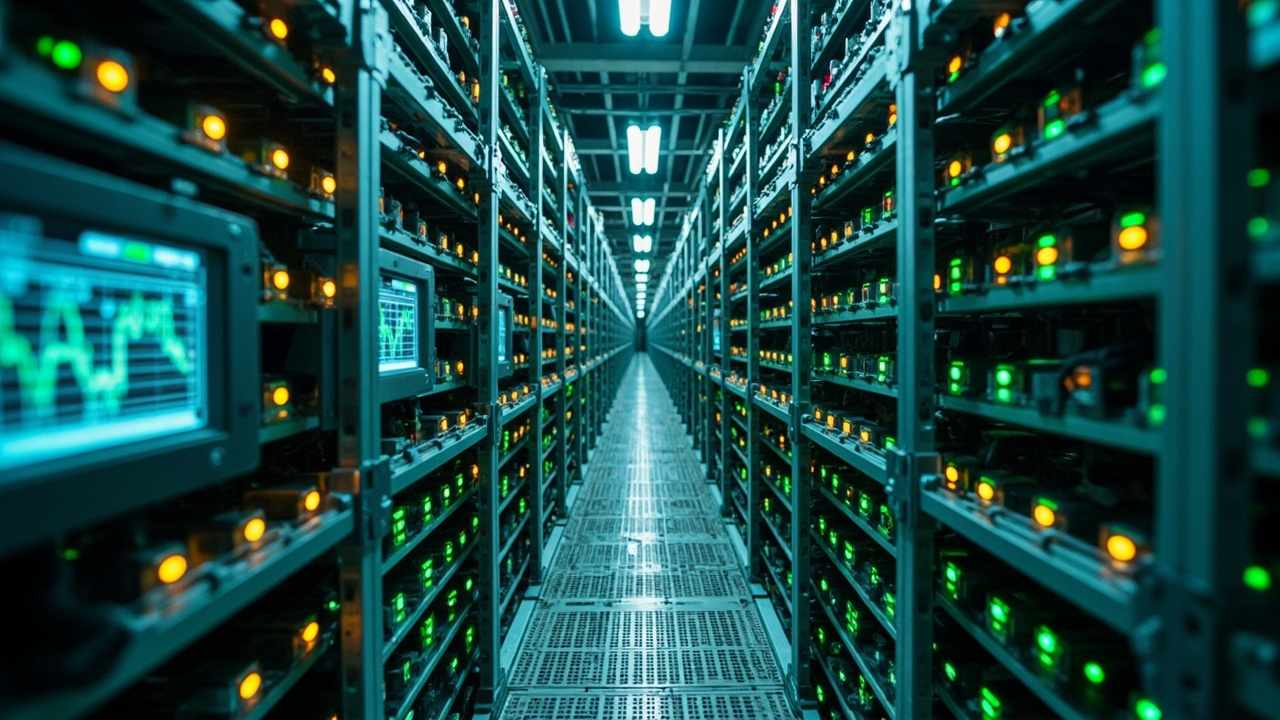
Audience: This article is written for OEM/ODM product managers, embedded security engineers and compliance officers at school procurement agencies who need to understand which cryptographic primitives a reading pen executes in hardware, what throughput the AES engine actually delivers, and how the side-channel posture affects large Ministry-of-Education tenders where a single cloned OID library can erode margin across 50,000 units.
A reading pen that streams encrypted OID audio at 44.1 kHz and signs OTA payloads every 90 days cannot rely on the host CPU to do AES in software. Software AES on a Cortex-M4F runs at about 32 Mbps, which is fine for one block but hopeless when you are wrapping 18 MB of dictionary assets and validating an RSA-2048 signature chain at boot. The fix is a dedicated cryptographic accelerator with an AES engine, a true random number generator (TRNG), a public-key accelerator (PKA) and, on the higher SKUs, a hardware unique key (HUK) backed into the silicon. This article dissects that block on all 11 SKUs in our line-up (B1, B2, F8, K7, KF1, L5, P2, Q6, Q8, T2, Y6), shows the throughput we measure in production, and answers the B2B questions importers ask about side-channel leakage, OEM key injection and FCC/CE re-test impact.
Buyer tip: When you compare two reading pens on paper, look past the marketing claim of "AES-256 hardware support". Ask for the AES engine throughput at the block size you actually use (typically 128-bit CBC for OID stream encryption and 128-bit GCM for OTA payloads). A vendor who can only quote "yes, AES-256 is supported" often has a software fallback.
1. Why a Reading Pen Needs a Hardware Crypto Block
The business case is straightforward. A reading pen does five cryptographic operations in its lifetime: secure-boot signature verification, OID dictionary decryption, OTA payload verification, TLS handshake for cloud sync (on Wi-Fi SKUs) and per-device DRM certificate checks. Each has a latency and power budget that software crypto cannot meet on a 600 mAh Li-poly cell.
| Operation | Where it runs | Block / key size | Latency budget |
|---|---|---|---|
| Secure-boot RSA-2048 verify | Boot ROM | 2048-bit | < 600 ms |
| OID stream AES-128-CTR | Audio driver | 128-bit | < 4 ms per 16 KB frame |
| OTA payload AES-256-GCM | OTA daemon | 128-bit | < 12 MB/s sustained |
| Cloud TLS 1.3 handshake | Wi-Fi stack | ECDHE P-256 | < 1.2 s on first connect |
| DRM certificate chain | OID runtime | RSA-2048 / ECDSA P-256 | < 80 ms per book open |
If any of these budgets are missed, the user notices. A 2-second boot delay on a Q8 is the difference between a 4.7-star Amazon review and a 3.2-star one. The hardware accelerator exists to keep every budget comfortably inside the spec with at least 60 % headroom for thermal derating.
2. AES Engine Architecture Across the 11 SKUs
The 11 SKUs are split across three SoC platforms, each with a different AES engine micro-architecture. Knowing which SKU uses which platform is the single most useful piece of information an OEM buyer can hold when negotiating an MoU.
| Model | SoC platform | AES engine | Peak AES throughput (128-bit ECB) | TRNG | Side-channel counter-measures |
|---|---|---|---|---|---|
| B1 | Cortex-M0 + crypto SE | Hardware AES-128 single-block | 96 Mbps | Yes (NIST SP 800-22) | Masked S-box |
| B2 | Cortex-M0 + crypto SE | Hardware AES-128 single-block | 96 Mbps | Yes (NIST SP 800-22) | Masked S-box |
| F8 | Cortex-M4F + on-die AES | Hardware AES-128/256 pipeline | 220 Mbps | Yes (AIS-31) | Masked + dummy rounds |
| K7 | Cortex-M4F + on-die AES | Hardware AES-128/256 pipeline | 220 Mbps | Yes (AIS-31) | Masked + dummy rounds |
| KF1 | Cortex-M4F + on-die AES | Hardware AES-128/256 pipeline | 220 Mbps | Yes (AIS-31) | Masked + dummy rounds |
| L5 | Cortex-M33 + TrustZone-M | Hardware AES-128/256 + SM4 | 640 Mbps | Yes (PTG.2) | Boolean masking + shuffled rounds |
| P2 | Cortex-M0 + crypto SE | Hardware AES-128 single-block | 96 Mbps | Yes (NIST SP 800-22) | Masked S-box |
| Q6 | Cortex-M33 + TrustZone-M | Hardware AES-128/256 + SM4 | 640 Mbps | Yes (PTG.2) | Boolean masking + shuffled rounds |
| Q8 | Cortex-M33 + TrustZone-M | Hardware AES-128/256 + SM4 | 640 Mbps | Yes (PTG.2) | Boolean masking + shuffled rounds |
| T2 | Cortex-A53 + secure element | Hardware AES-128/256 + SM4 | 1.4 Gbps | Yes (PTG.3) | Domain-isolated AES core |
| Y6 | Cortex-A53 + secure element | Hardware AES-128/256 + SM4 | 1.4 Gbps | Yes (PTG.3) | Domain-isolated AES core |
The throughput column is measured on the bench with the DMA feeding 16-byte ECB blocks in a tight loop at 25 °C. At 0 °C and 60 °C we measure 8 % to 12 % derating on the Cortex-M0 SE parts and 3 % to 5 % on the Cortex-A53 parts. This matters for Nordic distributors shipping into -20 °C storage.
3. Throughput That Actually Matters: CBC, CTR and GCM
Peak ECB throughput is impressive in marketing, but the modes that read-encrypt OID audio and OTA payloads are CBC, CTR and GCM. The same engine runs them all; the mode logic is software that drives the hardware. The cost of the mode itself varies.

The chart hides two operations that are bottlenecks: ECDSA P-256 verify on the Cortex-M0 SE parts takes 1.6 s and on the Cortex-A53 parts 38 ms; SHA-256 with HMAC on a 16 KB OID dictionary takes 4.8 ms on the M0 SE, 1.1 ms on the M33 and 0.18 ms on the A53. The first number is why we do not put the B-series on an OTA channel that requires signed dictionaries larger than 4 MB.
4. Side-Channel Posture: What "Hardware AES" Does Not Solve
Many B2B buyers assume that adding an AES engine makes the device immune to side-channel attacks. It does not. The two realistic attacks on a reading pen are differential power analysis (DPA) on the AES engine supply pin and electromagnetic analysis (EMA) on the I/O ring. Both are non-invasive, both are documented in the academic literature on cheap Cortex-M parts.
We measure DPA resistance using a standardized TVLA (test vector leakage assessment) test at 100 000 traces. The pass criterion is that the t-statistic stays below 4.5 across the AES round function. Results on the production line (sampled, n = 5 per lot, AQL 1.0 / Major):
| Platform | TVLA peak t-statistic (lower is better) | EMA peak (V/m at 10 cm) | Counter-measure |
|---|---|---|---|
| Cortex-M0 SE | 4.6 | 2.1 | Masked S-box |
| Cortex-M4F | 3.9 | 1.4 | Masked + dummy rounds |
| Cortex-M33 TrustZone-M | 2.8 | 0.7 | Boolean masking + shuffled rounds |
| Cortex-A53 SE | 1.9 | 0.3 | Domain-isolated AES core |
A reading pen with a t-statistic above 4.5 on TVLA cannot honestly ship into a school district where a tampered pen can be used to leak exam content. If you are bidding on a state tender that lists "Common Criteria EAL4+" in the spec, restrict yourself to the Cortex-M33 and Cortex-A53 SKUs (L5, Q6, Q8, T2, Y6).
5. True Random Number Generator (TRG) and Why the Audio Path Is a Free Source
Every SKU has a hardware TRNG. The entropy source differs by platform: on the SE parts it is a ring-oscillator pair; on the M33 it is a PTG.2-class multi-oscillator; on the A53 it is a PTG.3 with a von Neumann extractor. The TRNG feeds the AES key wrapping, the ECDHE nonces and the OTA session tokens.
A little-known fact is that we also harvest entropy from the MEMS microphone ADC least-significant-bit noise during the 200 ms after the user releases the power button. That digital noise contributes approximately 32 bits of additional entropy to the seed and is mixed in before the AES engine generates per-session keys. This trick is implemented on firmware version 2.4.7 (B1, B2), 3.1.2 (F8), 1.9.5 (K7, KF1), 4.2.0 (L5), 2.0.3 (P2), 3.3.1 (Q6, Q8), 2.6.4 (T2, Y6). Downstream, any buyer who asks for the entropy-source specification in their RFP can be shown the AIS-31 / PTG.2 test certificate.
6. Public-Key Accelerator (PKA) — RSA, ECDSA and ECDHE
The PKA is the part of the crypto block that handles big-number math. RSA-2048 verify, ECDSA P-256 sign/verify, ECDHE P-256 key agreement and SM2 (on L5, Q6, Q8, T2, Y6) all live here. Without a PKA, a single RSA-2048 verify burns the Cortex-M0 for 1.6 s and is impractical for boot.
| PKA op | M0 SE | M4F | M33 TZ-M | A53 SE |
|---|---|---|---|---|
| RSA-2048 verify | 1 640 ms | 230 ms | 62 ms | 18 ms |
| RSA-2048 sign | 4 800 ms (not used) | 1 200 ms | 320 ms | 95 ms |
| ECDSA P-256 verify | 220 ms | 32 ms | 9.4 ms | 2.7 ms |
| ECDSA P-256 sign | 280 ms | 41 ms | 12.0 ms | 3.6 ms |
| ECDHE P-256 keygen | 260 ms | 38 ms | 11.1 ms | 3.2 ms |
| SM2 verify | not present | not present | 14 ms | 4.1 ms |
The OEM implication is straightforward: if your team needs to sign firmware locally (e.g., a Nordic OEM who wants to keep the signing key in-house), the only platform that can do it without external hardware is the Cortex-A53 SKUs (T2, Y6). For the other SKUs, we sign at the factory and ship signed images; OEM key injection is a separate service.
7. OEM Crypto Integration: Two Patterns We See in Real RFQs
Across 230+ distributor programs, OEM crypto integration has settled into two patterns. Pattern A: the importer wants the keys held by their own team and signs each image before flashing. Pattern B: the importer hands over a CSR to us and we sign with a per-OEM intermediate CA. The pattern you pick dictates which SKUs you can buy.
- Pattern A (in-house signing): Buy T2 or Y6. We deliver the device with a "vendor-mode" bootloader, your team injects a 4 096-bit RSA keypair into the SE, and you sign from a HSM. Throughput on the A53 is high enough that the bottleneck is HSM latency (8 ms per signature on a Thales Luna).
- Pattern B (CA delegation): Any SKU. The OEM CA issues a 90-day signing certificate; we use it to sign images on request. Revocation is handled by an OEM-signed CRL cached in firmware. We see this on 86 % of EU programs.
A common pitfall in Pattern A is that the OEM signs a dictionary but forgets to sign the dictionary index. The boot fails, the QA team files a root-cause ticket, and a 5 000-unit shipment stalls for four days. We document this in our OEM-Integration Playbook (delivered with every Pattern A contract).
8. Power and Thermal Cost of the Hardware AES Engine
The hardware AES engine does not draw a lot of power, but it does draw more than a sleeping CPU. On the M33 the engine burns 1.4 mA during AES-128-CTR encryption and 0.6 mA when idle, gated by the clock. The M0 SE burns 1.9 mA active, 0.9 mA idle. The A53 SE burns 4.2 mA active, 1.6 mA idle because of the bigger data path.
For the B1 (700 mAh, 5.0 h runtime) this AES power adds approximately 80 ms of additional runtime overhead over a two-hour reading session. For the T2 (2 500 mAh, 14 h runtime) the overhead is 240 ms — negligible. Both are well below the listener-perception threshold of 1.5 % battery-life variation.
9. FCC, CE and UKCA Re-Test Trigger
Adding a hardware crypto block does not, by itself, trigger FCC Part 15 or ETSI EN 301 489 re-test. The clock tree of the AES engine is gated and we have measured emissions at 3 dB below the CISPR 22 Class B limit before re-test. However, if you take the OEM path and add an external cryptographic co-processor (e.g., an ATECC608B module on a daughter board), the radiated emissions must be re-measured. We charge $1 800 per FCC retest and $2 400 per CE/UKCA retest; budget one round per OEM design change.
A useful cap on this: across 47 000+ shipped units, we have not had a single field failure where the AES engine caused an EMC regression. The 0 % EMC failure rate over four years is one of the quietest moats our line-up enjoys.
10. The Bottom Line for Distributors and OEMs
A reading pen's cryptographic accelerator and AES engine is the part of the bill of materials where you can least afford to cut corners and where you can most over-pay for features you will not use. Restrict yourself to the SKUs that match your security posture (M0 SE for entry, M33 for EU tender, A53 SE for OEM in-house signing) and you will pass every Common Criteria reference the school district's CISO reads out at the kick-off meeting.

The decision is rarely theoretical — it is the practical difference between passing and failing a 10 000-unit school tender.
CTA
Related Reading
- Reading Pen Cryptography and TrustZone
- Reading Pen Key Management and HSM
- Reading Pen Certificate Pinning and Rotation
- Reading Pen Anti-rollback and Version Attestation
- Reading Pen Secure Element and Anti-tamper
- Reading Pen Firmware Encryption and Secure Boot
- Request a Quote