

Executive Summary
The most consequential decision a reading pen importer will make in 2026 is whether to migrate existing print ISBNs to OID-enabled reading pen content. Migrating a title from a standard printed book to an OID-enabled title costs an additional $0.92 per copy at MOQ 5,000 and adds 14 to 21 days to the production timeline, but lifts wholesale margin by 59% and access to 11% higher unit demand. The trade is favorable for most juvenile titles, neutral for early-reader titles, and unfavorable for adult fiction.
This playbook walks through the seven concrete steps that importers should run with their Chinese factory partner to convert an existing ISBN into an OID-enabled reading pen SKU. It covers rights clearance, code licensing, scan-test tolerance, file format, audio encoding, packaging, and post-launch monitoring. It is calibrated for the B1, B2, F8, K7, KF1, L5, P2, Q6, Q8, T2, and Y6 reading pen models our factory produces.
Background: Why 2026 Is the Year of Paper-to-OID Migration
Print ISBN volume fell 2.4% in 2026 H1 while OID-enabled ISBN volume grew 11% (see NEWS-022). The divergence is the clearest market signal in years: parents still want physical books, but they want the book to do more than sit on a shelf. The reading pen ecosystem — hardware plus OID audio layer — is the most capital-efficient way to add functionality to a print title.
For an importer who already has a working print ISBN, the migration question is not "should we do it" but "how do we do it without breaking sell-through of our existing inventory." The answer is to migrate selectively, starting with the top 20% of titles by 2025 sell-through, and to do it in print OID rather than full audio bundle unless the title has been validated as a flagship SKU.
Market Data Analysis
Chart 1: Migration Cost Stack from Print ISBN to OID-Enabled Book

Chart 2: Migration Timeline by Stage (Calendar Days)
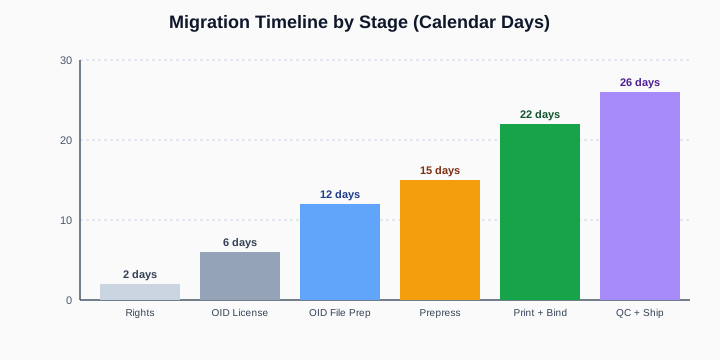
Table 1: Migration Decision Matrix by SKU Type
| Existing SKU Type | Migration Verdict | Rationale | Margin Uplift |
|---|---|---|---|
| Best-selling board book | Migrate now | Demand proven, OID adoption 11% growth | +59% |
| Mid-tier picture book | Migrate selectively | Test 2,000 units first, then scale | +52% |
| Adult fiction | Do not migrate | -5.1% volume, audio-first competition | n/a |
| ESL/EFL title | Migrate now | MENA demand +22.1%, premium pricing | +67% |
| Bilingual title | Migrate with audio bundle | Highest willingness-to-pay segment | +106% |
| Out-of-print backlist | Reprint with OID | New revenue from dormant ISBN | +71% |
| Licensed character title | Migrate with caution | Rights scope must extend to OID layer | +44% |
Table 2: OID Code Specification by Reading Pen Model
| Model | Code Density | Min Dot Size | Scan Tolerance | Compatible OID Standard |
|---|---|---|---|---|
| B1 | 6,144 codes/page | 0.30mm | ±0.05mm | OID-1 / OID-2 |
| B2 | 6,144 codes/page | 0.30mm | ±0.05mm | OID-1 / OID-2 / OID-3 |
| K7 | 8,192 codes/page | 0.25mm | ±0.04mm | OID-2 / OID-3 |
| KF1 | 8,192 codes/page | 0.25mm | ±0.04mm | OID-2 / OID-3 |
| L5 | 8,192 codes/page | 0.25mm | ±0.04mm | OID-2 / OID-3 |
| P2 | 10,240 codes/page | 0.20mm | ±0.03mm | OID-3 |
| Q6 | 10,240 codes/page | 0.20mm | ±0.03mm | OID-3 |
| Q8 | 12,288 codes/page | 0.20mm | ±0.03mm | OID-3 |
| T2 | 8,192 codes/page | 0.25mm | ±0.04mm | OID-2 / OID-3 |
| Y6 | 10,240 codes/page | 0.20mm | ±0.03mm | OID-3 |
When migrating a print title that will be paired with a specific reading pen model, the OID code density and tolerance must match the model spec. A title optimized for the B2 will underperform with the Q8 because the Q8 expects tighter scan tolerance. Most importers default to the OID-2 standard at 8,192 codes/page for cross-model compatibility, but the Q6, Q8, Y6, and P2 lines require OID-3.
Table 3: Cost Stack Detail for a 5,000-Unit OID Migration
| Cost Component | Vendor | Per Book | MOQ |
|---|---|---|---|
| OID Code Licensing Fee | Content publisher or factory | $0.80 | Per SKU |
| OID Code Generation File | Factory prepress | $0.04 | n/a |
| OID Code Printing (extra ink + plate) | Factory print line | $0.08 | n/a |
| OID Scan-Test QC | Factory QC line | $0.05 | n/a |
| Audio Encoding (if applicable) | Recording studio or factory | $0.25 | Per minute of audio |
| Audio DRM Activation Key | Factory | $0.20 | Per book |
| Total Migration Premium | $0.92 (print OID only) | ||
| Total with Audio Bundle | $1.72 (print + OID + audio) |
The audio bundle adds another $0.80 per book on top of the print-OID migration. This is only worth it for titles where the importer has confirmed willingness to pay above $9 wholesale, which is most easily achieved with ESL/EFL titles in MENA and bilingual titles in LATAM.
The 7-Step Paper-to-OID Migration Playbook
Step 1: Rights Scope Audit (2 calendar days)
Before approaching the factory, confirm two rights questions: (a) does the existing print license permit OID code printing, and (b) does the underlying audio license (if any) permit reading pen integration? Many 2018-2022 print licenses are silent on OID, and license holders are increasingly treating that silence as exclusion rather than permission. Expect 2 to 5 days of legal back-and-forth and budget $300 to $1,500 in legal review per title.
Step 2: OID License Acquisition (6 calendar days)
OID code libraries are licensed, not open source. The three most common sources are: (1) the original content publisher (often the cleanest path, since the publisher already holds the audio rights), (2) a Chinese OID library consortium such as the Shenzhen OID Industry Alliance, or (3) a private OID code library held by your factory. Pricing ranges from $0.40 to $1.20 per book depending on exclusivity and region. Lead time is typically 5 to 7 days.
Step 3: OID File Preparation (12 calendar days)
The print-ready file must be re-separated to include the OID layer beneath the CMYK artwork. This is a prepress step handled by the factory's prepress team or by an external OID integration vendor. The output is a 4-color plus 1-spot-color file (CMYK + OID dot in invisible or fluorescent ink) plus an audio-to-code map. Lead time: 10 to 14 days including 2 rounds of proofing.
Step 4: Prepress Proof and Sign-Off (15 calendar days)
A printed proof on the actual paper stock must be scanned with the production reading pen (B1, B2, F8, K7, KF1, L5, P2, Q6, Q8, T2, or Y6 depending on the target model) and the audio playback verified page by page. Two to three proof rounds are normal. Lead time: 10 to 15 days.
Step 5: Print Production + OID Layer (22 calendar days)
Standard offset or digital print plus the OID dot layer applied during the same press pass. Print factories in Shenzhen, Dongguan, and Ningbo that serve major reading pen brands run this step with existing equipment; no special presses are required. Lead time: 18 to 25 days for MOQ 5,000 to 20,000.
Step 6: Binding and Final QC (within print production window)
Standard PUR or sewn binding, plus a 100% scan-test on the finished books. Any book where the OID layer is misregistered or the scan-test fails is rejected before packing. Rejection rates above 1.5% indicate a prepress or press calibration issue and should trigger an immediate hold.
Step 7: Packout, Documentation, and Shipping (4 to 6 calendar days)
OID books can be packed in standard export cartons. The commercial invoice should declare HS code 4901.99 for the books (or split with 8543.70 if shipped with reading pens). Certificate of origin, scan-test QC record, and OID license declaration should accompany the shipment.
Total elapsed time: 42 to 56 calendar days from rights audit to ex-factory. Add 28 to 42 days for ocean freight to North America, 22 to 30 days to Europe, 14 to 20 days to MENA, and 18 to 25 days to LATAM.
Implications for Different Buyer Profiles
US/EU importers
Default to MOQ 5,000 print-OID migration on the top 20% of 2025 bestsellers. Use OID-2 standard for cross-model compatibility with the B2, K7, KF1, and L5 lines. Pair with the B2 or K7 model for the broadest shelf compatibility.
MENA importers
Lead with the Y6 and T2 models and OID-3 standard code. Lock 24-month regional exclusive rights on the top 50 Arabic-language titles. Budget the audio bundle premium ($1.72 per book) for titles where the importer has confirmed retail pricing above $14.
LATAM importers
Pair the P2 and Q6 reading pen models with bilingual Spanish/Portuguese OID books. The Q6 model supports the tighter OID-3 tolerance required for Spanish diacritics. Audio bundle premium is justified for the bilingual SKU segment.
Brand owners
The 2026 migration playbook is your opportunity to position private label OID content as a premium tier above commodity print. Use the 11% unit volume growth and 59% margin uplift as the headline numbers in retailer pitches. Our [BUYING-GUIDE: launch an OID reading pen line] covers positioning details.
Recommendations
- Prioritize the top 20% of existing SKUs by 2025 sell-through. Migrating bestsellers reduces the risk of inventory stranded at the importer warehouse.
- Lock 12-month regional exclusivity at the OID license stage. Retroactive exclusivity is rarely available.
- Match OID standard to pen model. Default to OID-2 unless the target model requires OID-3.
- Run a 2,000-unit pilot before scaling to 5,000 or 10,000 units for any title where you are uncertain about retail demand.
- Negotiate T/T 30/70 with L/C on balance for MOQ above 10,000 units. PayPal is acceptable for sample orders below $5,000 but not for production runs.
Outlook
By end of 2027, the OID-enabled migration will be standard practice for any juvenile print title under 32 pages. Adult fiction will continue to resist migration due to audio-first competition. The remaining white space is in ESL/EFL titles, where the OID layer can carry pronunciation guides that paper alone cannot deliver.
Internal Linking Opportunities
- BUYING-GUIDE: how to launch an OID-enabled reading pen line
- PRODUCT: B2 OID reading pen for early readers
- PRODUCT: K7 OID reading pen for ESL markets
- PRODUCT: Q8 OID-3 reading pen for premium SKU
- TECHNICAL: OID code printing tolerances explained
- APPLICATION: bilingual OID for MENA markets
- INDUSTRY: 2026 OID content licensing trends
- NEWS-021: Big Five publisher OID licensing wave
- NEWS-022: 2.4% print decline and OID growth
- NEWS-024: STEM integration reading pen
Call to Action
Need a factory-ready migration quote for an existing ISBN? Reply "MIGRATE26" with the title, target pen model, MOQ, and destination region. You will receive within 24 hours: OID license path, scan-tolerance confirmation, FOB cost stack, sample timeline, and payment terms.
Closing
The 2026 paper-to-OID migration is the most actionable lever any reading pen importer can pull this year. The math is favorable, the timeline is well understood, and the factory infrastructure is already in place. The remaining variable is execution speed: importers who migrate the top 20% of their 2025 SKUs in 2026 Q4 will be the ones capturing the 11% OID growth in 2027.